
Resource Guide
Understanding Church Layouts
A practical map of common church spaces and features you will encounter in listings and site notes.
Churches were designed for worship, procession, community gathering, and symbolism. Although every church is different, many follow similar layouts and contain recurring architectural features that appear regularly in listing descriptions, guidebooks, and local histories.
Learning the basic structure of a church makes it much easier to understand how a building developed over time and how different spaces were used.
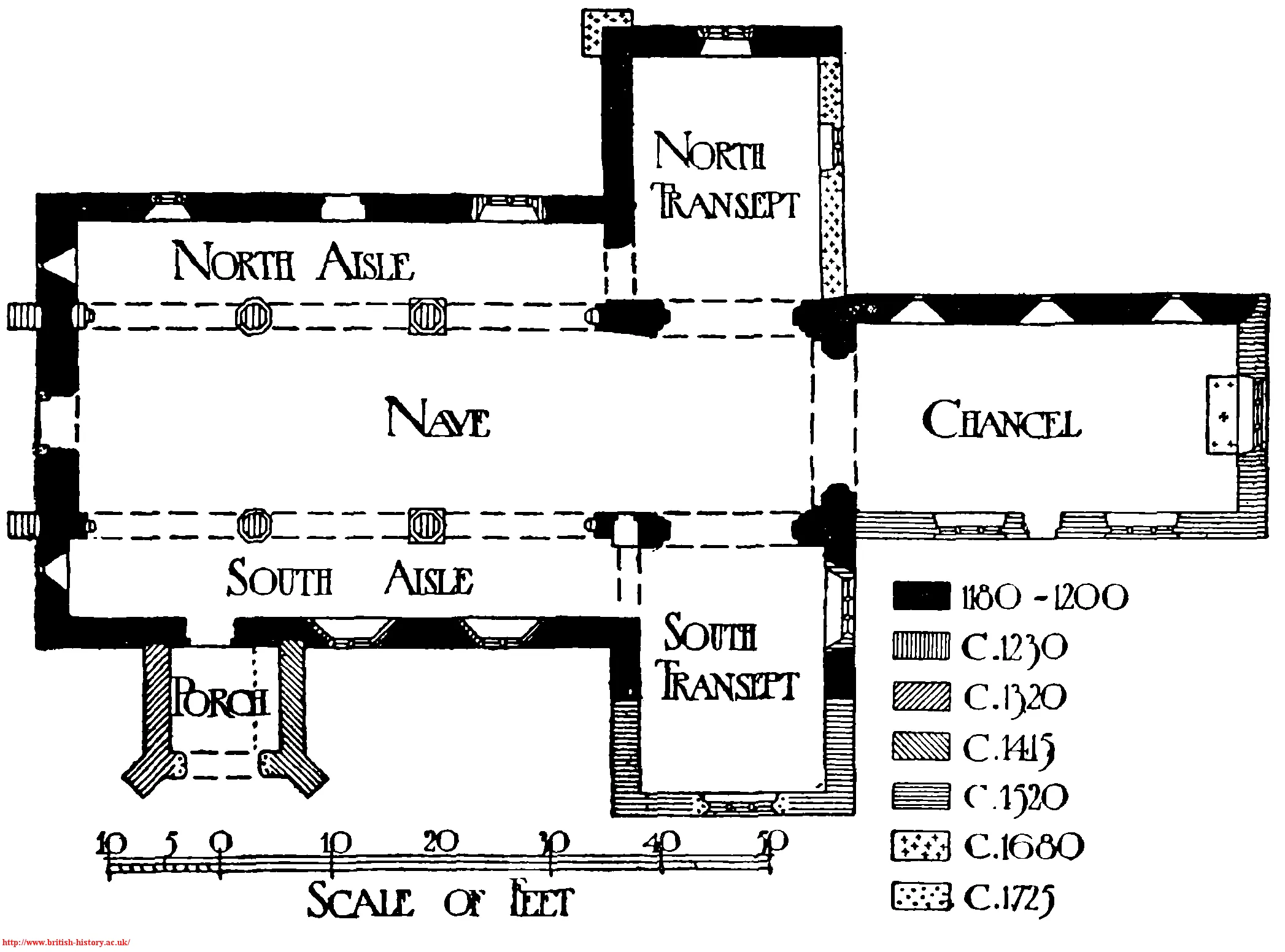
The Basic Church Plan
Most traditional churches in England are arranged on an east-west axis:
- The altar is usually at the eastern end
- The main entrance is often at the west end
- The nave forms the central gathering space
- Additional chapels and aisles extend from the main body of the church
Many medieval churches were designed in the shape of a cross when viewed from above.
Common Church Spaces
Nave
The main body of the church where the congregation gathers. This is often the largest and oldest visible part of the building.
Chancel
The area around the altar, traditionally reserved for clergy and choir. Chancels are often slightly raised above the nave.
Sanctuary
The holiest part of the church surrounding the altar itself.
Aisles
Passages running alongside the nave, usually separated by arcades of arches.
Transepts
Sections extending north and south from the nave, forming the arms of a cross-shaped church plan.
Porch
An entrance structure attached to the church, commonly on the south side in English parish churches.
Vestry
A room used for clergy robes, church records, and preparation before services.
Chapel
A smaller area or side space dedicated to private prayer, memorials, or particular saints and families.
Baptistery
A space associated with baptism, often containing the font.
Towers and Bells
West Tower
Many English churches have towers at the western end containing bells.
Bellcote
A smaller bell housing usually positioned above the roofline rather than as a full tower.
Spire
A tall pointed structure rising above a tower.
Inside the Church
Font
The basin used for baptisms, often positioned near the entrance to symbolise entry into the Christian life.
Pulpit
The raised platform used for preaching.
Lectern
A stand used for reading scripture, often shaped like an eagle in Anglican churches.
Reredos
An ornamental screen or structure behind the altar.
Choir Stalls
Wooden seating for clergy and choir, commonly found in larger churches and cathedrals.
Sedilia
Stone seats built into the wall near the altar for clergy.
Piscina
A small stone basin used for washing sacred vessels.
Rood Screen
A screen separating the nave from the chancel, common in medieval churches.
Rood Loft
A gallery above the rood screen, often removed after the Reformation.
Windows and Light
Lancet Windows
Tall narrow pointed windows associated with Early English Gothic architecture.
Tracery
Decorative stonework within Gothic windows.
Clerestory
An upper row of windows above the nave arcade designed to bring light into the church.
Rose Window
A large circular decorative window more common in cathedrals and major churches.
Roofs and Ceilings
Hammerbeam Roof
A richly decorated timber roof associated with medieval craftsmanship.
Vaulting
An arched stone ceiling structure.
Bosses
Decorative carved features positioned where roof ribs intersect.
Churchyards
Lychgate
A roofed gateway marking the entrance to the churchyard.
Yew Trees
Ancient evergreen trees commonly found in churchyards.
Chest Tombs
Large raised tomb structures often belonging to wealthy local families.
War Memorials
Many churches contain memorials to local people lost in conflict.
Reading the Building
One of the most rewarding parts of visiting churches is learning to recognise how buildings changed over time.
Look for:
- blocked windows or doorways
- changes in stone colour
- differing roof heights
- rebuilt towers
- Victorian restoration work
- reused medieval fragments
Most churches are layered buildings shaped by centuries of repair, expansion, destruction, and changing worship practices.
Understanding the layout helps reveal these layers and allows the story of the building to become much easier to read.