How to Build a Medieval Parish Church?
13 May 2026Church Pilgrim Team14 min read
How communities, craftsmen and patrons planned, funded and built parish churches across generations.
For many villages across Britain, the parish church became the centre of community life for centuries. Baptisms, marriages, funerals, festivals, markets, and moments of national crisis all unfolded in the shadow of these buildings. Yet the churches themselves were rarely built quickly. Most developed gradually across generations through the labour of masons, carpenters, glaziers, blacksmiths, labourers, clergy, and local communities. This guide explores how a medieval parish church would typically have been planned, funded, and constructed in England and Wales.
Long before the first stone was laid, the location itself mattered deeply.
Many medieval churches stood on sites that already carried religious or communal importance. Some were founded beside springs, hilltops, crossroads, burial grounds, or earlier Saxon churches. Others may even have replaced older sacred landscapes used before Christianity arrived.
Churches were often positioned near:
The churchyard itself frequently became one of the oldest continuously used pieces of land in the village.
A parish church could not simply be built by anyone. Permission was normally required from both local landowners and the bishop.
Funding might come from:
Sometimes a lord built a church to demonstrate status and piety. In other places the entire community contributed labour, materials, carts, timber, or money over many years.
Building a church was an enormous undertaking for a medieval village.
Most churches were built using materials gathered locally.
Stone might come from nearby quarries or riverbeds. In areas without good building stone, churches could be constructed from flint, sandstone, limestone, timber, or a mixture of materials.
Key materials included:
Transport was difficult and expensive. Heavy stone was often moved using ox carts, sledges, or rivers.
The choice of local material heavily shaped the appearance of regional churches. The golden limestone churches of the Cotswolds, the flint churches of East Anglia, and the red sandstone churches of the Midlands all reflect local geology.
Most medieval churches followed a basic plan, although wealth and ambition could greatly expand the design.
Typical features included:
Churches were usually aligned east-west, with the altar placed at the eastern end.
Architectural style changed over time:
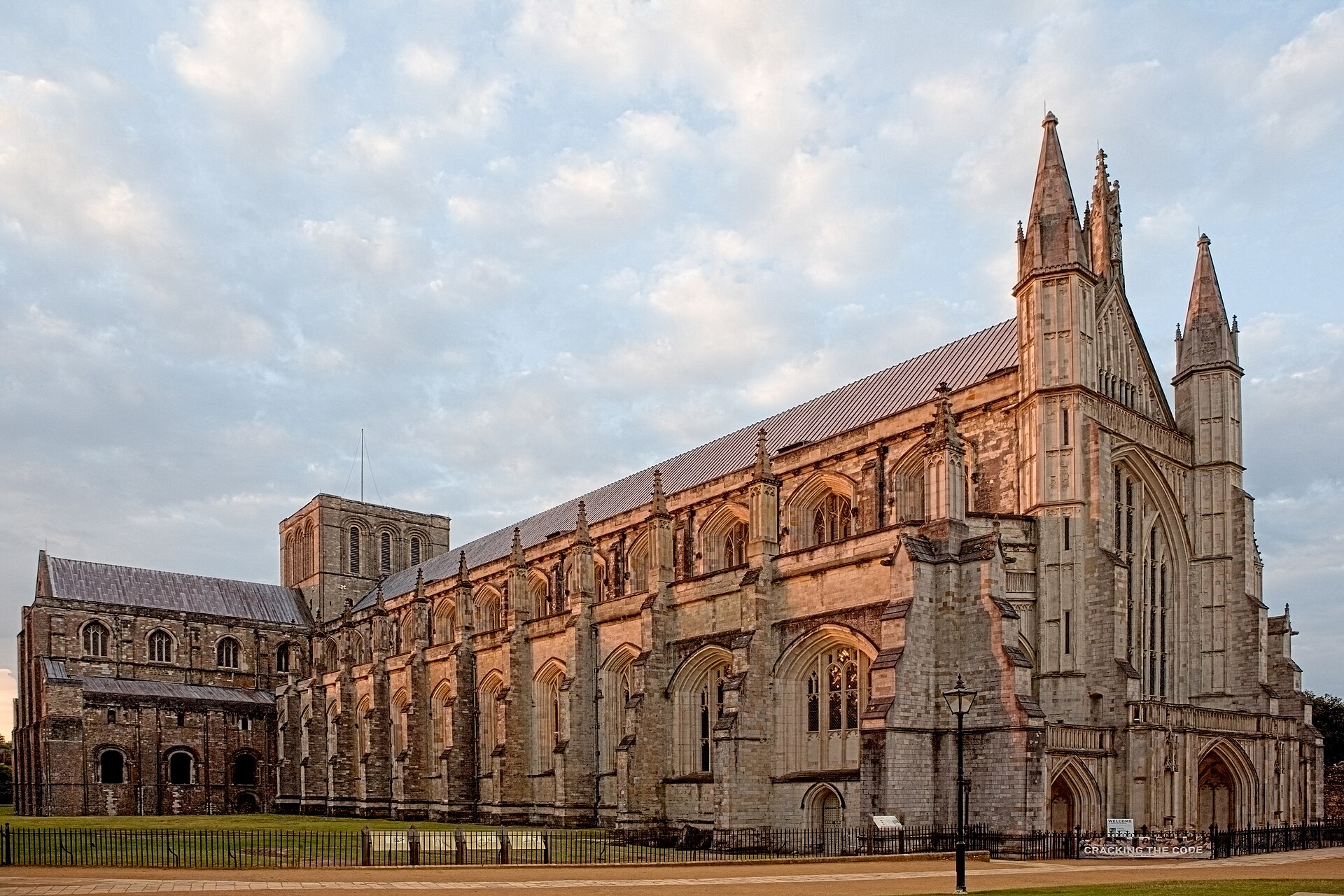
Very few churches were completed in a single campaign. Most evolved gradually across centuries.
Once the site had been prepared, labourers dug trenches for foundations.
Foundations were often surprisingly shallow by modern standards, particularly in smaller rural churches. Builders relied heavily on thick walls and careful weight distribution.
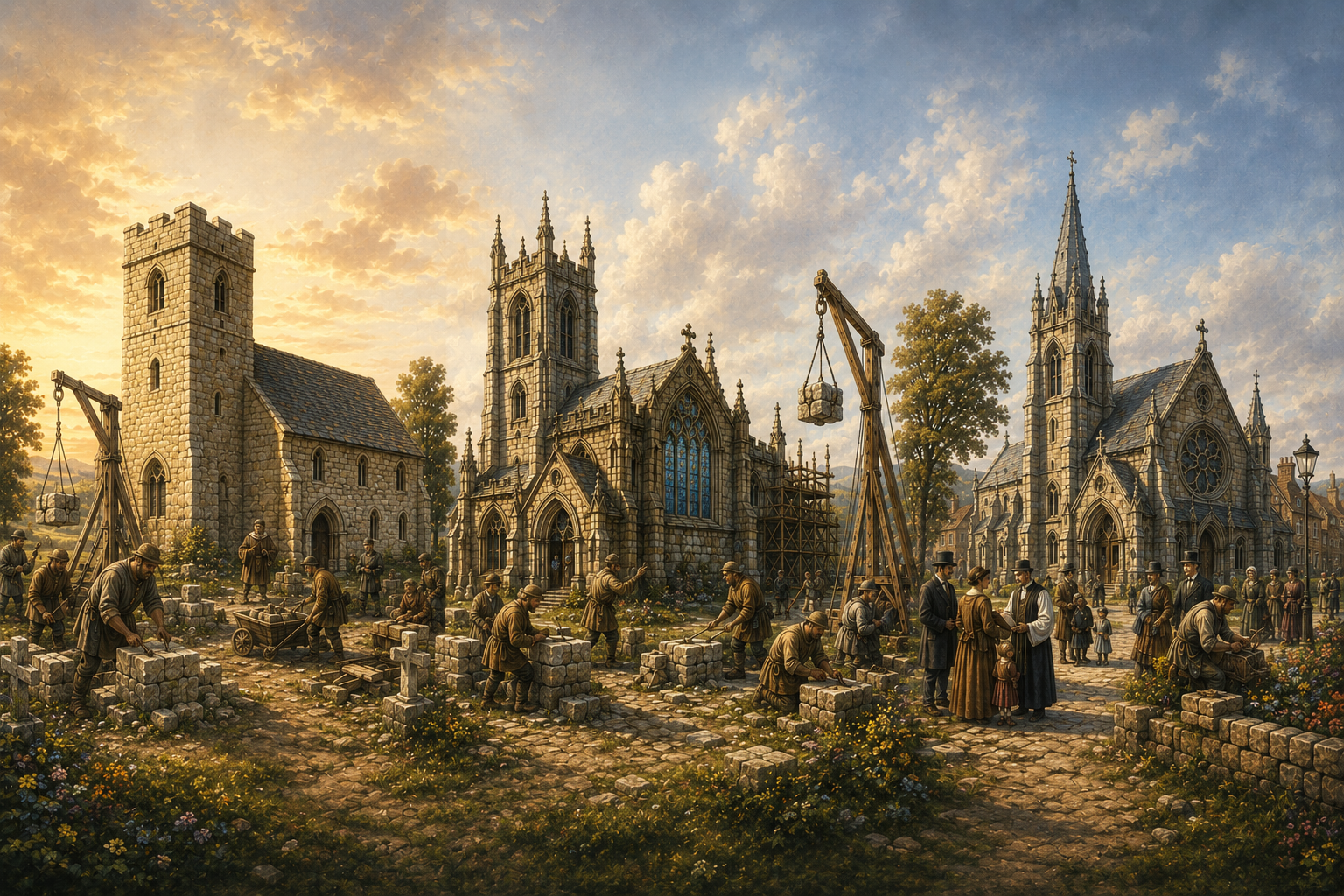
The construction process was physically demanding. Labourers mixed mortar by hand, raised scaffolding from timber poles, and lifted heavy stone using ropes, pulleys, and wooden cranes.
Master masons directed the work while apprentices and labourers carried materials and shaped stone.
As construction continued, masons gradually raised the walls course by course.
Doorways and windows were carefully shaped using carved freestone surrounds. Decorative carving often appeared around:
Many masons left distinctive marks on the stone they shaped.
Church towers and spires presented major engineering challenges. Some villages spent decades saving money before towers could be completed.
The roof was one of the most technically complex and expensive parts of the church.
Large oak timbers were shaped into trusses and lifted into place high above the nave. Medieval carpenters developed sophisticated timber-framing techniques capable of spanning surprisingly wide spaces.
Roofs could be covered with:
Some churches later received elaborate hammerbeam or wagon roofs decorated with carved angels, painted panels, and bosses.
Medieval churches were often far more colourful than they appear today.
Walls could be painted with:
Stained glass filled churches with coloured light while rood screens separated the nave from the chancel.
Altars, statues, candles, banners, and painted ceilings created an immersive sacred environment.
Much of this decoration disappeared after the Reformation, although traces survive in some churches.
Church bells played a vital role in medieval life.
They called villagers to worship, marked deaths and celebrations, warned of danger, and structured the rhythms of daily life.
Large towers became symbols of local pride and wealth. Some were added generations after the rest of the church had already been completed.
Bell founding itself required specialist craftsmen capable of casting massive bronze bells.
Once sufficiently complete, the church could be consecrated by a bishop.
The consecration ceremony marked the building's formal dedication and often involved:
From that point onward the church became the centre of parish life.
Churchyards expanded over centuries as generations were buried around the building.
Additional features were gradually added:
Most churches were never truly finished.
One of the most fascinating aspects of parish churches is that they were rarely static buildings, but living structures repeatedly altered as communities, worship patterns, resources, and architectural tastes changed over time.
Across centuries churches experienced:
A church built in the 12th century might contain:
Each generation left its own layer behind.
That gradual accumulation of history is part of what gives parish churches their extraordinary character today.
In practical terms, this means many churches are best understood as evolving records rather than single-period monuments. Masonry joints, blocked doorways, reset windows, replaced roofs, and reused stone often reveal moments of adaptation that written records only partly describe.
For visitors today, these layered changes are part of the value of parish churches. They preserve not one medieval moment, but a long sequence of decisions made by communities responding to faith, weather, resources, damage, and changing needs.
Medieval parish churches were not simply constructed buildings. They were communal, spiritual, and artistic projects shaped across generations.
Every carved stone, roof beam, bell, and window reflects the labour and faith of countless people whose names are now largely forgotten.
Today these churches continue to preserve centuries of craftsmanship, memory, worship, and local identity within their walls.
Understanding how they were built helps us understand not only the buildings themselves, but also the medieval communities that created them.
Explore example medieval church listings:
Subscribe for updates on new stories, churches and collections.
© Church Pilgrim 2026